
Outdoor Adventure Story
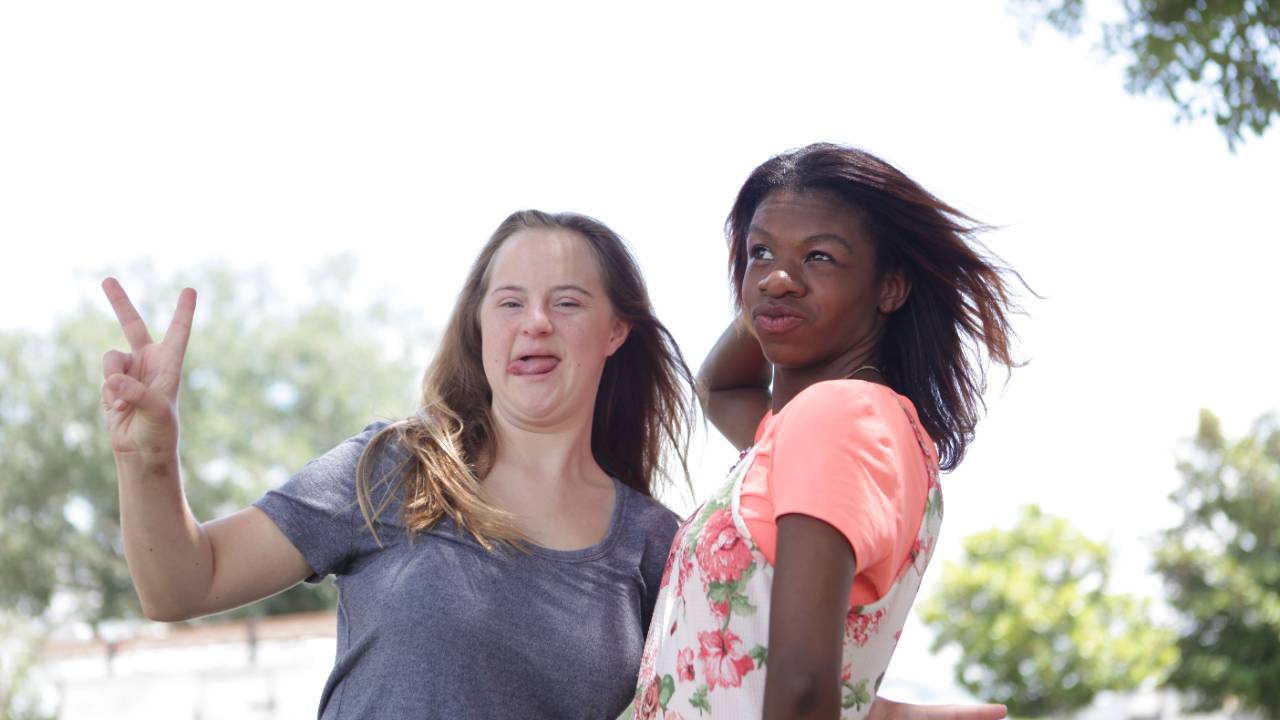
The outdoors serve as a great stage, story prompt, and place for students to practice observation. This activity invites students to take what they notice and turn it into a story.
Here's how it works:
1. Take students outside. Head to a playground, field, garden, courtyard, or anywhere students can safely explore their surroundings.
2. Give students a quiet minute to look and listen. Ask them to notice something that catches their attention. It could be a changing leaf, a bird, a cloud, a tree, an insect, a sound, or even something they feel or hear.
3. Collect everyone's ideas. Invite each student to share what they noticed. Students can say it, point to it, gesture, use AAC, make a sound, or have someone help communicate their idea.
4. Give the story a beginning. Choose one observation to get things started. For example, “One cool fall morning, we were walking through the park when we noticed [first student's idea].”
5. Build the story, one idea at a time. Ask questions that help students connect their observations:
-
What happened next?
-
Who noticed it?
-
What did they do?
-
What did it sound like?
-
How did the character feel?
-
Where should we go next?
6. Add movement and sound. As the story develops, invite students to become part of it. A student might move like a falling leaf, make the sound of the wind, act like a bird, or become a character in the story.
7. Give the story an ending. When you've collected enough ideas, ask, “How should our adventure end?” Let students vote, choose from a few options, or contribute their own ending. Then tell the whole story from beginning to end. Better yet, act it out as a group!
Sometimes a group story can turn into a long list of things students noticed: We saw a tree. Then we saw a bird. Then there was a leaf.
To turn those observations into an actual story, look for connections.
-
Add a problem: “The bird can't find its nest.”
-
Give the characters a goal: “We need to help the bird get home.”
-
Add a surprise: “Just when we found the nest, the wind blew all the leaves away!”
-
Give students a choice: “Should we follow the bird or look under the tree?”
-
Let students decide what happens next: The more ownership students have, the more the story becomes theirs.
Level Down:
-
Use visual prompts or picture cards to help students choose an observation.
-
Offer two or three story starters or choices for what happens next.
-
Let students contribute through a word, sound, gesture, movement, AAC, or pointing.
-
Have the teacher narrate students' ideas and model how to connect them.
-
Build the story one short sentence at a time.
Level Up:
-
Assign character roles and turn the story into a short performance.
-
Encourage students to add descriptive language, emotions, and sensory details.
-
Have students create sound effects or movement motifs inspired by the environment.
-
Introduce a problem that the characters need to solve.
-
Challenge students to structure the story with a beginning, middle, and end.
-
Divide the class into two groups. Have each group create a story, then retell or perform it for the other group.
Why We Love It
There isn't one “right” way to participate. A student who communicates verbally might contribute a character or a line of dialogue. Another student might choose what happens next, create a sound effect, or show an idea through movement.
Everyone gets to be part of the story. And that's what makes this activity more than an outdoor observation exercise. Students are practicing communication, choice-making, imagination, collaboration, and creative expression while creating something together.
This is also an activity you can revisit throughout the season. The story changes because the world around your students changes. You may be surprised by what they notice the next time you step outside.
